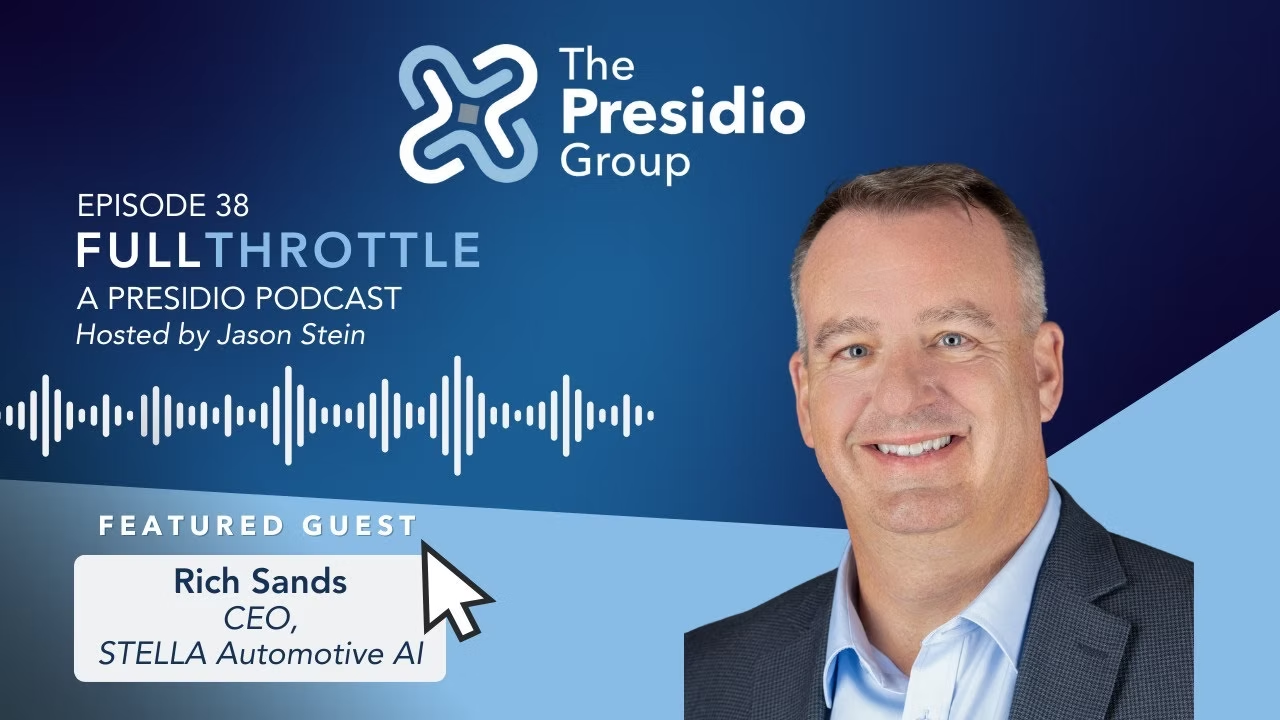
STELLA Automotive AI CEO Rich Sands recently appeared on an episode of the Full Throttle podcast with host Jason Stein to discuss the latest trends and insights on automotive AI. They talked about AI for car dealerships and the transformative impact it’s having on the industry. Here are the key insights from the episode:
Growing acceptance of AI in automotive
A recent study revealed that 31% of consumers prefer interacting with AI agents, a significant increase from previous years. This shift shows a growing comfort level among consumers across various demographics, from Gen Z to baby boomers, in using AI for their automotive needs. As AI technology becomes more integrated into everyday interactions, dealerships must adapt to meet these changing preferences.
In 2024, STELLA AI handled 2.6 million calls for automotive retailers, according to Sands, and spent 50,000 minutes interacting with customers using conversational AI to handle their requests.
Enhancing the customer experience
STELLA AI is designed to improve the initial customer experience at dealerships, which is often marred by high turnover rates among staff. By utilizing AI trained specifically in automotive language, STELLA can handle customer inquiries efficiently, reducing the average time to book a service appointment from 7-8 minutes to just 1.5 minutes. This efficiency not only enhances customer satisfaction but also streamlines dealership operations. In 2024, STELLA AI booked 375,000 service appointments for dealerships, Sands said, helping them maximize their revenue.
“Guests really appreciate that efficiency, the ability to complete the task, the ability to transfer to a human when it’s when necessary,” Sands said.
Data-driven insights
One of the standout features of STELLA Automotive AI is its ability to analyze vast amounts of data across multiple customer interactions. This capability allows dealerships to identify trends and customer preferences before they become apparent through traditional methods. For instance, STELLA can predict the best times to engage customers based on their behavior, providing dealerships with valuable insights to tailor their marketing strategies.
Collaboration with industry leaders
Sands highlighted the importance of partnerships with major automotive players, including OEMs and large dealer groups. These collaborations are crucial for developing comprehensive AI solutions that can be seamlessly integrated into dealership operations. Notably, STELLA has been included in General Motors’ new IMR and PASE programs and Stellantis’ digital dealer program.
The future of AI for car dealerships
Looking ahead, Sands expressed excitement about the rapid advancements in AI technology and its potential to revolutionize various aspects of dealership operations, from fixed operations to variable operations.
“The absolute key is to make sure that you integrate these technologies into dealership processes for how they would like to interact with their guests to make sure we’re putting the guest first, to make sure that we are putting the employee first at the dealership,” Sands said. “These are tools to augment and help and support automotive retailers and their employees have a better experience with their guests and the guests have a better experience with the dealership.”
With ongoing investments and collaborations, companies like STELLA Automotive AI are well-positioned to lead the charge in automotive retail.
“Smart dealers are embracing and running with it, and both they and their guests are enjoying the benefits and setting the tone in the marketplace,” Sands said.
Watch the Full Throttle Podcast to hear the whole conversation.
AI answering services are becoming essential in the automotive industry, helping dealerships manage incoming calls, schedule appointments, and qualify leads more efficiently. Despite their growing popularity, many assume that implementing AI means replacing human employees. However, AI answering services are designed not to substitute staff but to work alongside them, enhancing productivity and customer engagement. This article explores how AI and live staff can collaborate effectively to streamline dealership operations and provide an exceptional customer experience.
Understanding AI answering services
An AI answering service is an artificial-intelligence-powered solution designed to handle a variety of customer interactions over the phone, web chat, and/or SMS. Solutions like STELLA AI use advanced natural language processing and machine learning to understand and respond to customer inquiries in real time. According to Zendesk, 75% of consumers who have already used generative AI think it will change their customer service experiences in the near future. At dealerships, these systems can answer incoming calls, provide information, schedule appointments, qualify potential leads, and even route calls to the appropriate department or staff member when needed.
By automating these routine and repetitive tasks, AI answering services free up valuable time for live staff to focus on more complex and high-value activities. This not only improves operational efficiency but also ensures that customers receive prompt and accurate responses at any time of day, on weekends, and even on holidays. Additionally, AI can handle multiple calls simultaneously, eliminating wait times and reducing missed opportunities. Overall, AI answering services serve as a reliable first point of contact that enhances dealership operations while supporting your human team.
The role of live staff in dealership operations
While AI answering services efficiently handle routine interactions, live staff remain essential to the success of any automotive dealership. Their key responsibilities include managing complex customer inquiries that require in-depth product knowledge, conducting negotiations, and providing personalized engagement tailored to each customer’s unique needs and preferences.
Live staff build trust and rapport with customers, guiding them through the buying or service process with a personal touch that fosters loyalty. However, there are limitations: live staff have restricted availability, especially outside regular business hours, and can become overwhelmed during peak call times. Busy phone lines and long wait times can lead to missed calls and lost opportunities, creating gaps in customer service that AI answering services are well-suited to fill. Together, human expertise and AI efficiency create a balanced approach that maximizes customer satisfaction and operational effectiveness.